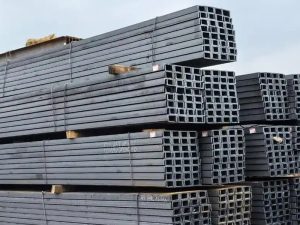
| Standard |
GB/T 1591-2008 |
Low alloy high-strength structural steel standard |
| Grade |
Q345B |
Impact tested at 20℃ |
| Chemical Composition (wt%) |
|
|
| – Carbon (C) |
≤0.20 |
To ensure proper weldability and formability for large-section billets |
| – Silicon (Si) |
≤0.55 |
Helps in deoxidation and influences the strength and toughness properties |
| – Manganese (Mn) |
≤1.70 |
Enhances strength and toughness across the thick section |
| – Phosphorus (P) |
≤0.040 |
Kept at a low level to prevent embrittlement in large billets |
| – Sulfur (S) |
≤0.040 |
Minimized to reduce the risk of cracking during processing |
| – Niobium (Nb) |
≤0.07 |
Microalloying element for grain refinement, improving mechanical properties |
| – Vanadium (V) |
≤0.15 |
Aids in strengthening and enhancing heat resistance in thick sections |
| – Titanium (Ti) |
≤0.20 |
Helps to improve toughness and structural stability |
| – Nitrogen (N) |
≤0.012 |
Controlled to avoid issues like porosity and embrittlement |
| Mechanical Properties |
|
|
| – Yield Strength (ReL) |
≥345 MPa |
For relevant thickness range applicable to 300x300mm section; adjusted as per standard requirements |
| – Tensile Strength (Rm) |
470 – 630 MPa |
Ensures the ability to bear heavy loads in structural applications |
| – Elongation (A) |
≥21% |
Provides necessary ductility for fabrication and operation |
| – Impact Energy (Akv) |
≥34 J |
At 20℃ (longitudinal specimen), important for resisting sudden impact and maintaining integrity |
| – Bending Test |
180° |
Bend diameter: 3a (where ‘a’ represents the side length of the square billet or relevant dimension, here for 300x300mm billet) |
| Dimensions |
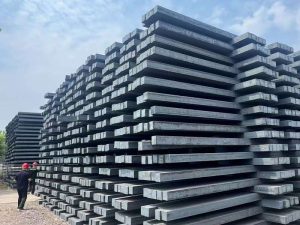
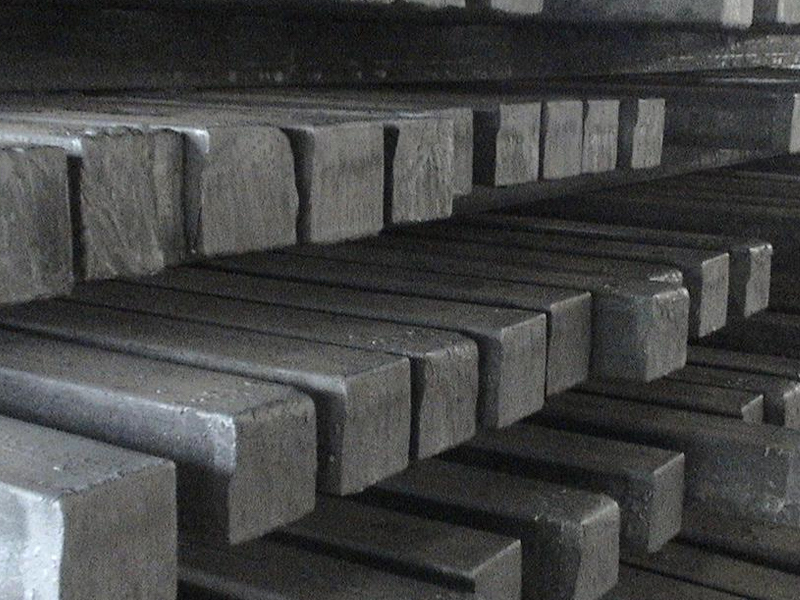
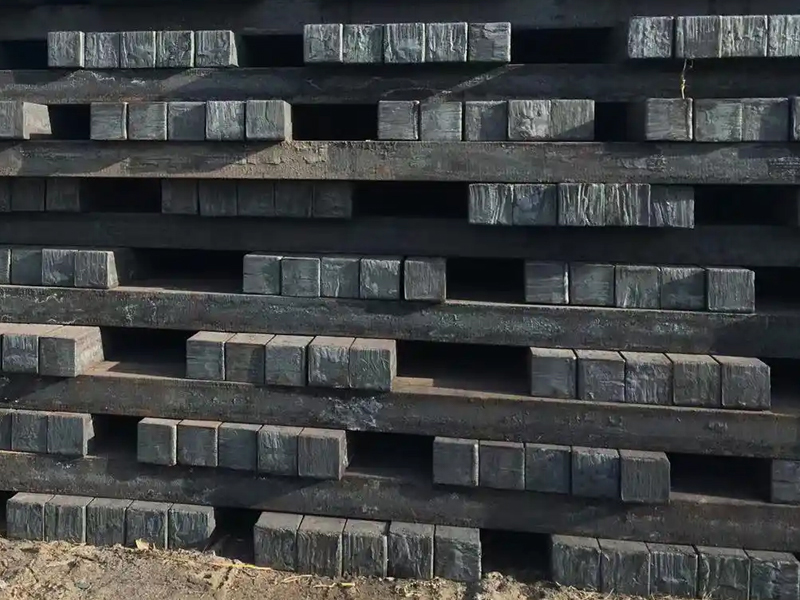
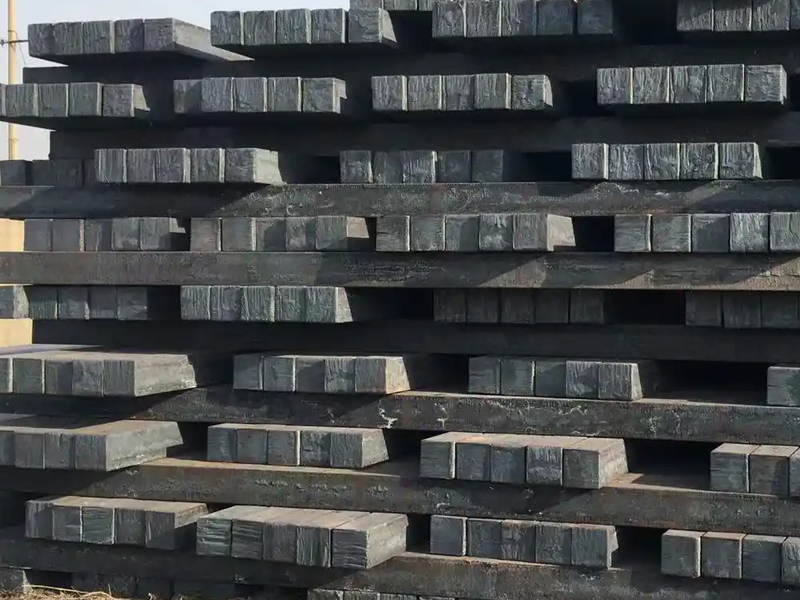
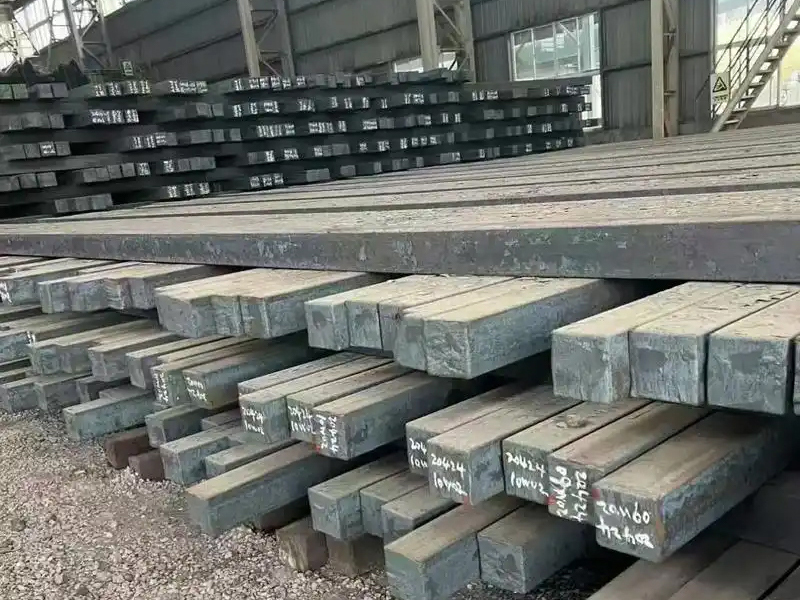
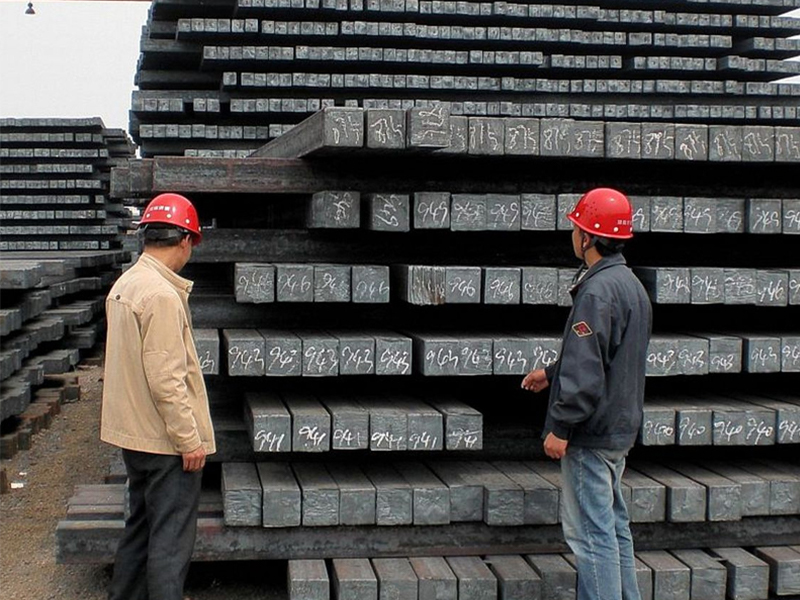
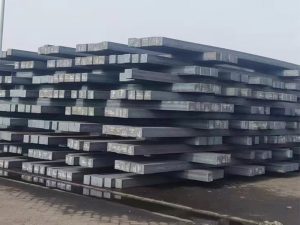
300 x 300 mm (square cross-section) |
Nominal size; with allowable tolerance ranges as per manufacturing standards |
| Length |
Usually 6 – 12m (customizable) |
Standard delivery lengths, can be adjusted according to specific project needs |
| Surface Quality |
Required to be free from cracks, significant surface defects like deep scratches, and excessive oxidation scale |
To ensure suitability for further processing steps like forging, rolling, etc. |
| Delivery Condition |
Hot rolled, normalized, or TMCP (Thermo-Mechanical Control Process) |
Based on specific requirements for optimizing mechanical properties and fabrication needs |
| Typical Applications |
Structural components for large bridges, heavy industrial machinery frames, large-diameter pipe manufacturing billets, foundation structures for high-rise buildings, and components for large-scale pressure vessels |
Ideal for applications demanding large-sized, high-strength steel materials with good workability |